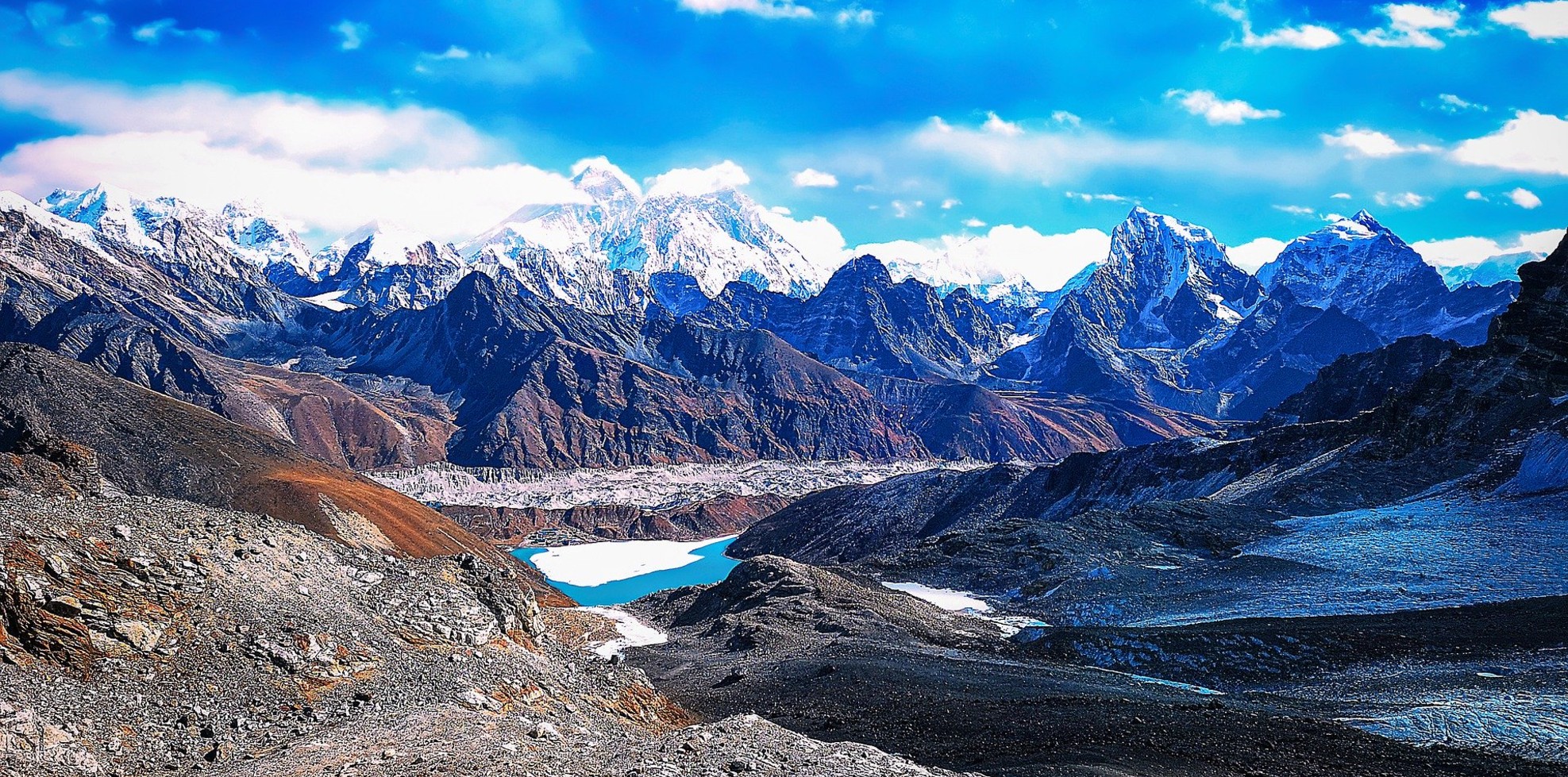
 Gokyo Ri View
The ideal time to hike to Everest Base Camp in Nepal is during the spring (pre-monsoon) and autumn (post-monsoon) seasons. Here’s a summary of the most ideal months:
Good weather with no rain, mild temperatures, and rhododendron blooms. Generally, the best time to trek to Everest Base Camp. More chance of encountering other trekkers on the trail.
Somewhat stable weather, good visibility, moderate temperatures. The second-best season for trekking to Everest Base Camp. Generally, the most popular time, so many more trekkers on the trail.
During these seasons, conditions and visibility are generally favorable, making for a more enjoyable trekking experience. Daytime temperatures range from 10 to 20 degrees Celsius (50 to 68 degrees Fahrenheit) at lower altitudes and are moderate. Temperatures drop below freezing, especially at higher elevations during the night and early mornings. That said, while these seasons provide the best weather, they also happen to be the most congested periods on the trail. If you prefer a less hectic trek with fewer people, consider the shoulder seasons of late February to early March or late November to early December. But remember that weather conditions can be more unpredictable during these times. You should prepare for your Everest Base Camp trek well in advance, select a reputable trekking company, and have the necessary gear, physical fitness, and acclimatization techniques before the climb begins.
The weather and climate at Everest Base Camp vary significantly depending on the season. Here is an outline of the climate during each season:
Spring is considered one of the best seasons for trekking to Everest Base Camp. Temperatures increase gradually, from cold mornings to warmer days. Average daytime temperatures at lower altitudes range from 5 to 15 degrees Celsius (41 to 59 degrees Fahrenheit). Nights and early mornings can be quite cold, with temperatures dropping below freezing. The weather is generally stable, but occasional rainfall or snowfall can occur, especially at higher altitudes. Clear skies and good visibility are common, providing panoramic views of the surrounding mountains.
The monsoon season is the least favorable time for trekking, as heavy rainfall occurs in the Everest region. Trails can be muddy, slippery, and prone to landslides. Clouds and mist often obstruct mountain views, reducing overall visibility. However, some trekkers still undertake the journey during this time, as the region is relatively less crowded.
Autumn is another popular season for trekking to Everest Base Camp. The weather becomes more stable, with clear skies and excellent visibility. Daytime temperatures range from 10 to 20 degrees Celsius (50 to 68 degrees Fahrenheit) at lower altitudes. Nights and early mornings can still be cold, with temperatures dipping below freezing. The chance of rainfall or snowfall is relatively low, and trails are in better condition. This season offers breathtaking views of the mountains and colorful landscapes.
Winter brings cold and harsh weather conditions to the Everest region. Temperatures drop significantly, especially at higher altitudes, with daytime temperatures ranging from -10 to 10 degrees Celsius (14 to 50 degrees Fahrenheit). Nights and early mornings are extremely cold, with temperatures well below freezing. The region receives less precipitation, but occasional snowfall is possible. Trails may be covered in snow and ice, making them more challenging to navigate. Winter trekking requires appropriate gear, experience, and a higher level of preparedness.
Please note that weather conditions in the mountains can be unpredictable and may vary even within a single day. It is recommended to check weather forecasts, consult local guides or trekking agencies, and be prepared for changes in weather during your Everest Base Camp trek.
Trekking to Everest Base Camp during the best seasons, such as spring (pre-monsoon) and autumn (post-monsoon), offers several advantages. However, it is important to consider potential drawbacks as well. Here are some pros and cons of trekking to Everest Base Camp during the best season:
Favorable Weather: The best seasons offer more stable weather conditions, with clear skies, good visibility, and mild temperatures. This enhances the overall trekking experience and allows for better views of the mountains and landscapes.
Well-Defined Trails: During the peak seasons, the trekking trails to Everest Base Camp are well-traveled and marked. It helps to make things easier for people trekking by themselves.
Services on Offer: The teahouses and lodges along the trekking route are fully operational during the best seasons. In other words, you have a greater variety of places to stay and even food options and all these services are more convenient and comfortable.
Cultural Exchange and Enthusiasm: trekking in peak seasons means you’re probably going to meet more trekkers from around the world. That would provide opportunities for cultural exchange, making the travel life more interesting and enjoyable. You can also find trekking companions or join groups if you would like.
Crowded Trails: Peak seasons bring a large number of trekkers to Everest Base Camp. Trails tend to become overcrowded, especially at popular stopping points and teahouses. This change will affect the solitude and calm some trekkers seek in the mountains.
Increased Costs and Limited Availability: In the peak seasons as demand expands, prices for accommodation, food and other service items on the trekking route may be higher. Also, there might be a scarcity of some lodgings, particularly at popular resting places. The mountaineers in the peak season also contribute to high environmental impact by bringing more demands to vulnerable mountain areas in high-traffic seasons.
Follow some principles like Leave No Trace: practicing responsible trekking and getting the smallest footprint of your waste into the ecosystem possible. More trekkers on the trail mean that booking places to stay and travel with your travels on your own becomes a must in peak seasons. It means flexibility in adapting your itinerary or making spontaneous changes on the fly is reduced. At the end of it all, your choice on trekking Everest Base Camp in the most favourable season is a matter of people’s taste, priorities, and tolerance for crowd.
There are alternate seasons — like the shoulder seasons — that may be worth considering for you in the event of a quiet trek with fewer people present on the trail. Different hiking routes in Nepal outside the Everest Base Camp trek. Nepal is home to many adventure trekking trails, as well as Everest Base Camp.
Annapurna Circuit Trek: The Annapurna Circuit Trek is one of the most popular and diverse treks in Nepal. Its trails range from lush valleys, terraced fields and dense woods to high mountain passes. The trek provides stunning views of the Annapurna and Dhaulagiri mountain ranges.
Langtang Valley Trek: The Langtang Valley Trek is a scenic and less crowded trek located close to Kathmandu. It takes you through stunning valleys, dense forests and traditional Tamang villages. The high point of this trek is the panoramic view of Langtang Lirung, the highest peak in the region (7,227 meters).
Manaslu Circuit Trek: The Manaslu Circuit Trek is a physically challenging trek that traverses the breathtaking Mount Manaslu (8,163 meters). It provides scenic views of the Himalayan peaks, diverse landscapes, and an opportunity to enjoy the unique Tibetan-influenced culture of the region.
Upper Mustang Trek: In the Mustang region the Upper Mustang Trek is a cultural hotbed of culture and a kind of remote wilderness. At a single hike to Lo Manthang, the hidden kingdom, you will visit ancient monasteries as well as caves and traditional Tibetan Buddhist culture. The walk is an extraordinary surreal desert-like landscape.
Makalu Base Camp Trek: In eastern Nepal the Makalu Base Camp Trek is less traveled and difficult to complete. You will reach the base camp of Mount Makalu (8,485 meters, 5th highest) on the mountain. Features stunning views of Himalaya, virgin forests and the beautiful Sherpa and Rai villages.
Kanchenjunga Base Camp Trek: In a very remote and less well-touted part of Nepal towards the far east, this is the camping trek at Kanchenjunga Base Camp. It boasts breathtaking views of Mount Kanchenjunga (8,586 meters), the third-tallest peak in the world. The trek ushers you through rock formations like rhododendron forest, terraced fields, and isolated villages. Nepal presents us with tons more trekking options, to name a few of them.
Every trek has its own challenges, features, or highlights. It takes time, terrain, adventure and experiences to complete this expedition, and a great deal of consideration is required to decide upon an easier path. Research and consult experienced trekking agencies or guides for a safe and fun trekking experience: This is highly recommended.
One of the most highly sought-after tourist destinations in the Himalayas, Bhutan…
If you've ever daydreamed of misty mountain mornings, prayer-flag-riddled ridges, and the…
Planning a trek in Bhutan? Learn how to choose the best routes…
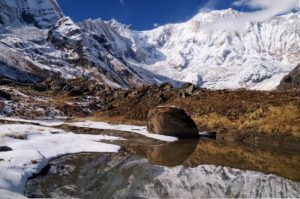
As you trek up to the Annapurna Base Camp, you will most…
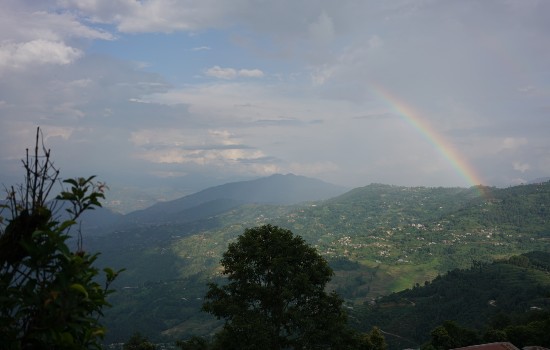
Nepal is a perfect place to stay as it boasts some of…
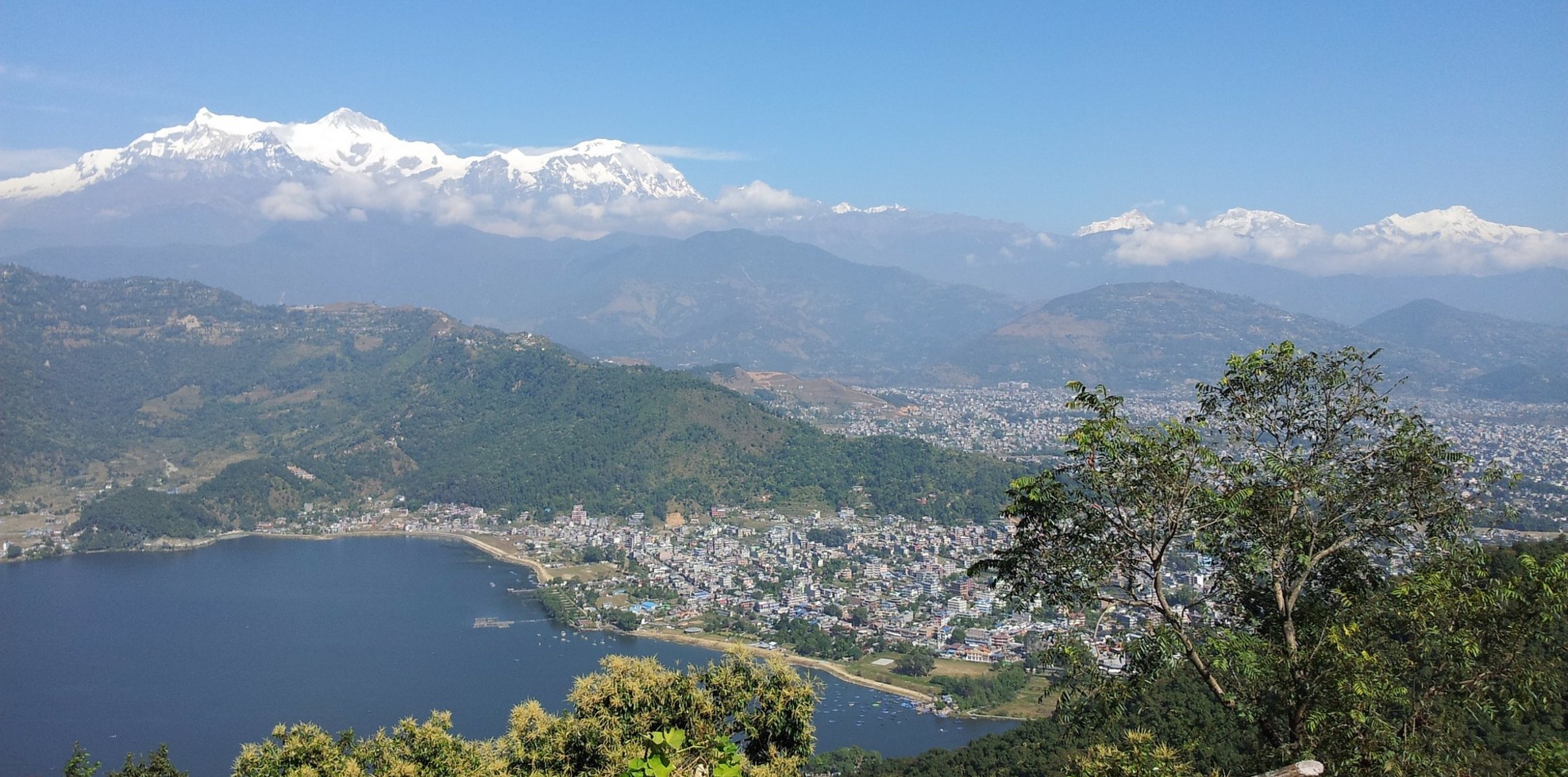
Introduction A trip to Nepal and Bhutan is to visit the heart…