If you’ve ever daydreamed of misty mountain mornings, prayer-flag-riddled ridges, and the thunder of Himalayan peaks above you, you’re probably already torn between two legendary treks: EBC and ABC. Both trips have pulled thousands of adventurers into Nepal’s high Himalayas. But which fits you best? That’s what we will explore here.
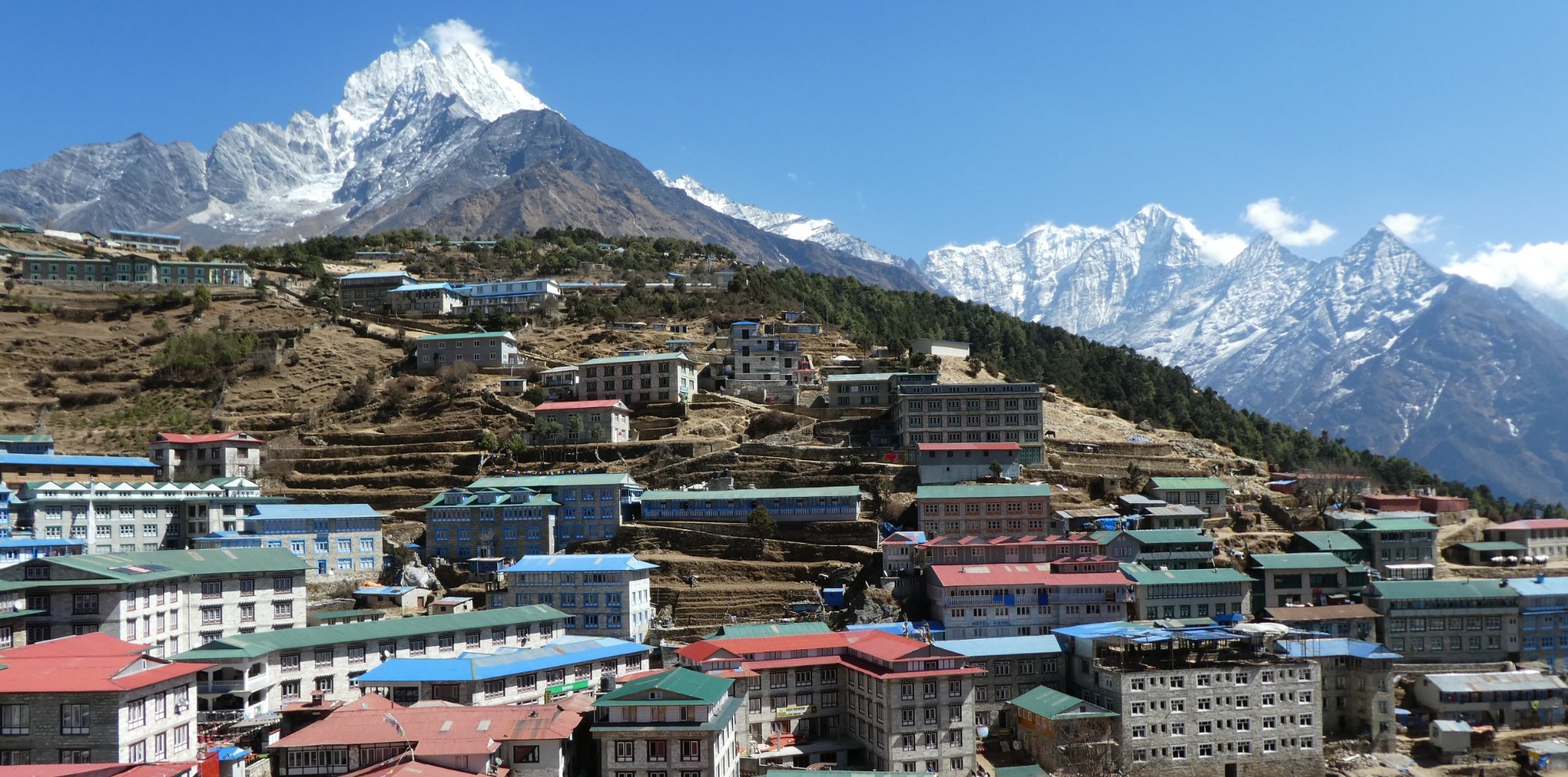
@Namche Bazar
We will walk you through the key differences, from pace and altitude to scenery, cost, logistics, comfort, and challenge – so you can pick not just a trek, but the one that matches your vibe, your experience, and what you are looking for.
Whether you want a gentle Himalayan immersion or a full-on high-altitude expedition, by the end, you will know which one to put on your bucket list.
The Annapurna Base Camp trek, popularly known as the “Annapurna Sanctuary Trek,” is a classic Himalayan hike that takes you through changing landscapes, ranging from lush valleys and terraced farmland to rhododendron forests, rivers, suspension bridges, and finally alpine ridges rising to the base camp at about 4,130 meters (13,550 ft).
You begin walking from the village of Nayapul (Phedi), along the Modi Khola valley, and pass through traditional villages, forests, and terraced fields before gradually ascending to the “Annapurna Sanctuary“.
Since the highest altitude is around 4,130 meters (much lower than the Everest region), the trek is generally more accessible and can often feel more comfortable than truly high-altitude treks.
More about what makes this trek special in the Himalayan Windows post: Journey of a lifetime: Trekking to Annapurna Base Camp
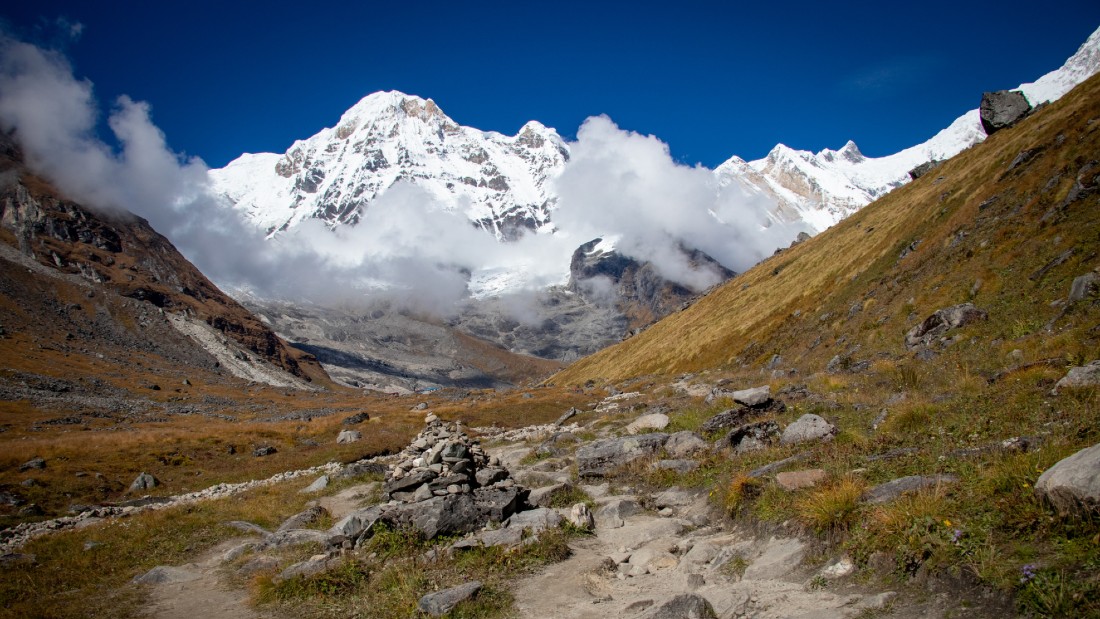
@Annapurna Base Camp
The Everest Base Camp trek is a trek to the doorstep of the world’s tallest mountain. The EBC trek plunges you deep into the high Himalayas of the Khumbu region, through Sherpa villages, rugged terrain, glaciers, suspension bridges, monasteries, and ultimately to the base camp near the massive Khumbu Glacier.
During the trek, you reach altitudes as high as 5,545 meters (18,188 ft) when you climb to vantage points like Kala Patthar for unforgettable sunrise views over Mount Everest, Lhotse, Nuptse, and other Himalayan giants. The adventure begins with the thrill of landing on the tiny runway of Lukla airport, carved into the mountains. You then progress through Namche Bazar, Tengboche, Dingboche, Lobuche, and Gorakhshep. If you plan to extend the trek, the high-altitude Gokyo lakes can be visited, extending your trek for a few days. If you choose the Gokyo Ri – Everest Base Camp Trek, you will cross the Cho La Pass, which stands at an altitude of 5,363 meters above sea level.
Every stage and every location of the trek offers something unique, whether it be the hospitality, the interactions, the panoramic Himalayan vistas, or the meditative calm of remote monasteries. EBC is considered by many to be the epitome of Himalayan trekking, but it comes with its own challenges. Due to higher altitude, tougher terrain, and weather uncertainty, EBC poses greater demands on physical fitness, mental readiness, and acclimatization.
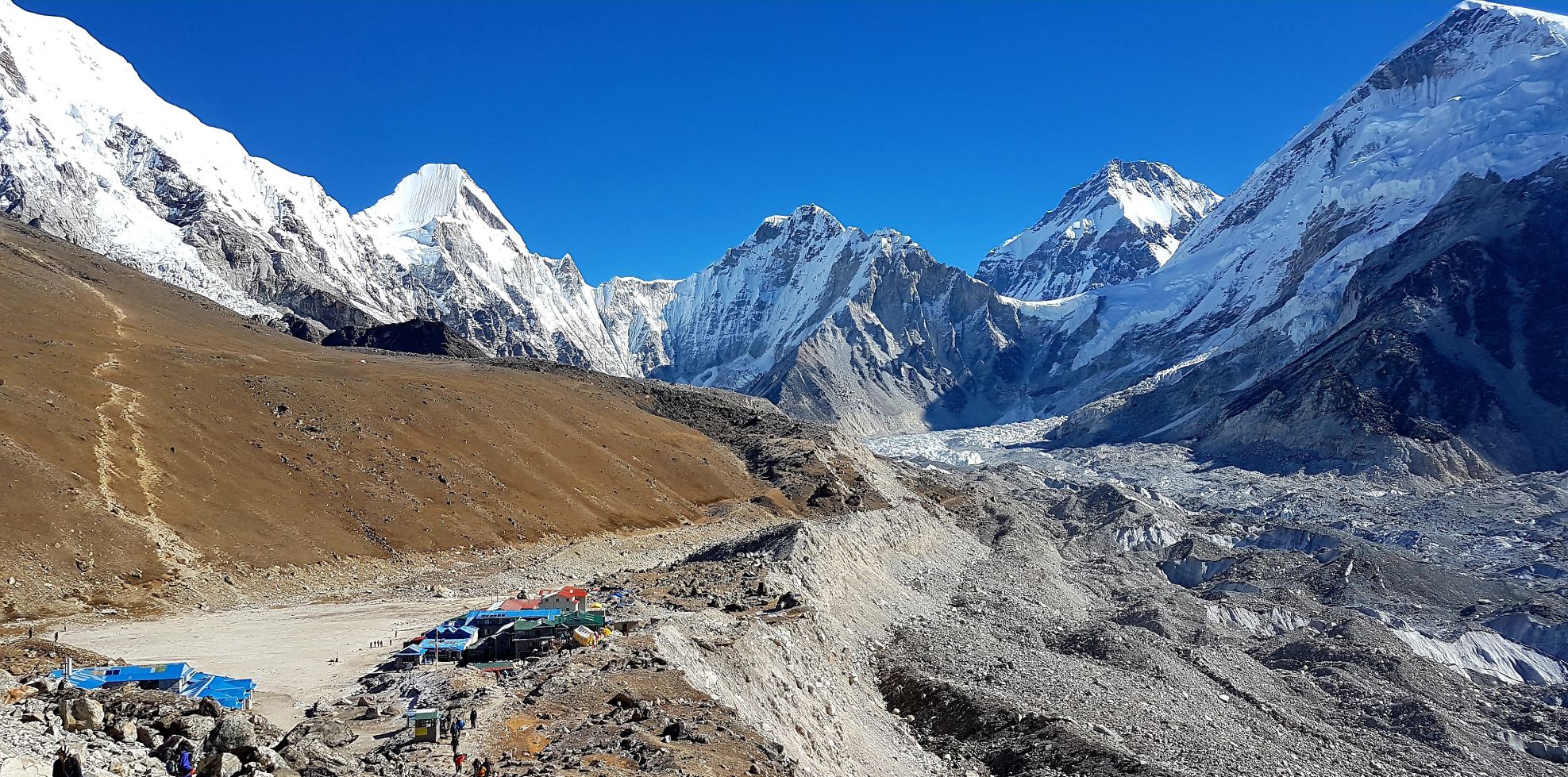
@Everest Base Camp
SUGGESTED READ | All you need to know before planning your EBC Trek
| Factor | Annapurna Base Camp (ABC) | Everest Base Camp (EBC) |
| Max Altitude | 4,130 meters | Up to 5,545 meters (Kala Patthar) |
| Trek Duration | Typically 8-12 days (with standard itineraries) | Typically 12-14 days (with standard itineraries) |
| Difficulty | Moderate (steep in parts, but overall manageable). Suitable for trekkers with basic fitness. | Demanding (High altitude, long days, and tougher terrain). Requires good fitness and some altitude experience. |
| Landscape & Scenery | Lush forests, terraced fields, rivers, and villages with a gradual climb into alpine meadows and mountain amphitheatre. Offers a more varied ecological and cultural experience. | Dramatic high-altitude Himalayan vistas: glaciers, snow-peaked mountains, rugged terrain. The raw grandeur of Everest and the surrounding Himalayan giants. |
| Culture & Community | Trek through traditional villages: Gurung, Magar communities, with rural hospitality and tranquil mountain village life. | Rich Sherpa culture, monasteries, and Himalayan villages. Unique high-altitude culture and spiritual atmosphere. |
| Comfort & Logistics | Teahouses + some hotel stays before/after trek, easier road access (road + short drive to trailhead), generally more relaxed logistics. | Remote: flights to Lukla (weather-dependent), rugged trails, basic teahouses at high altitudes, and more variability (weather, altitude delays). |
| Cost & Time Investment | Often less expensive overall (less altitude gear, fewer flights/helis, simpler logistics). Good balance of cost and experience. | Higher costs (flights, gears, high-altitude needs) and higher time/fitness investment for good acclimatization and safety. |
| Best For… | Trekkers wanting a balanced Himalayan experience: good view, culture, manageable challenge, and none of the severe altitude risks. | Trekkers seeking the “Ultimate Himalayan Conquest,” who are ready for higher altitude, more challenge, and aiming for iconic Everest-region views. |
If you want the safest weather, crisp mountain views, and stable conditions, autumn is unbeatable.
Why Autumn is Ideal:
For ABC: The forests are fresh and green, waterfalls are full, and the Annapurna Sanctuary looks unbelievably clear.
For EBC: The entire Khumbu region opens up with long-distance visibility. Trekkers get to enjoy a great sunrise from Kala Patthar.
Spring is another fantastic time to trek, especially for nature lovers.
Why Spring is Special:
For ABC: This is the most colorful time. The lower sections explode with red and pink rhododendron blossoms.
For EBC: Views are great, though sometimes hazier than autumn. Temperatures are milder, which helps with high altitude camping and lodging.
Winter trekking is not for everyone, but it has its rewards.
Pros:
Cons:
ABC in Winter: More doable compared to EBC since ABC is at a lower elevation.
EBC in Winter: During winter, temperatures get below the freezing point, especially above Dingboche. It is only recommended for experienced trekkers to hike during this season.
This is the least ideal season for both treks.
Challenges:
ABC in Monsoon: Lower trails can be lush and beautiful, but slippery and cloudy. Mountain views may be rare.
EBC in Monsoon: Not recommended due to flight issues and muddy trails.
Choosing between the legendary ABC and EBC trek is never easy. Each offers something special, and the right choice really depends on what matters most to you (comfort, challenge, views, culture, time), but based on what you prioritize, here’s my take:
Go for ABC if you want:
Go for EBC if you want:
No trek in the Himalayas is ever truly “easy.” Both the Annapurna Base Camp (ABC) and Everest Base Camp (EBC) routes demand respect, patience, and a mindset ready for the mountains’ unpredictable nature. They’re breathtaking journeys, but they also come with real challenges that all trekkers should be aware of.
If I were you, trekking from Kathmandu, with maybe 10-14 days, a moderate budget, love of nature and villages, and not seeking to push physical limits too hard, I would go for ABC as a first Himalayan adventure.
It gives you a real taste of Nepal’s mountains and culture, beautiful views, manageable challenge, and a sense of accomplishment without pushing into extreme territory.
But if I had more time, good fitness, proper gear, a spirit for high altitude, and hunger for raw Himalayan grandeur, I would aim for EBC. There is something magical about walking in the shadow of Everest, living the ruggedness, and staring at the world’s highest peaks from Kala Patthar.
And honestly? If you love trekking, why not plan to do both? ABC first, then EBC another time. Each offers a different flavor of the Himalayas, and together they will provide a fuller, deeper connection to Nepal’s mountains.
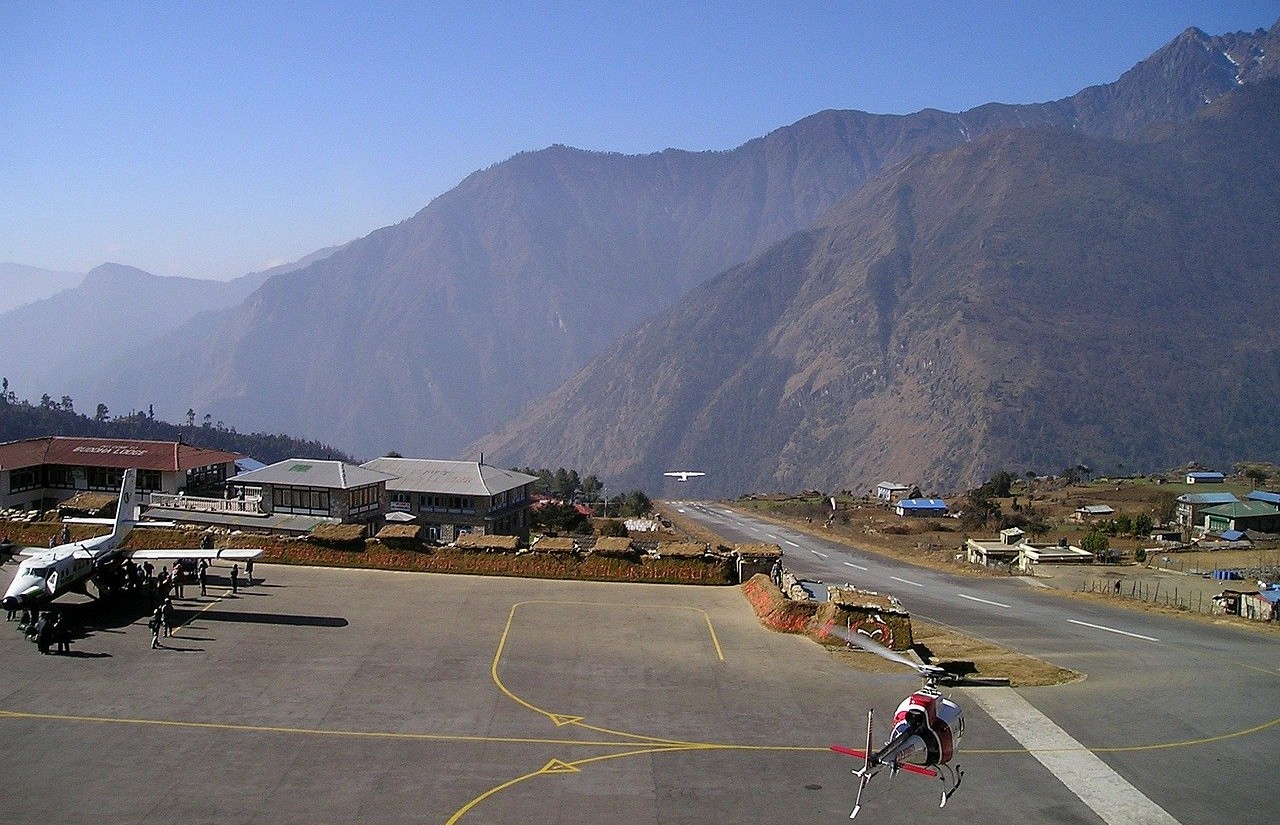
@Lukla Airport – Gateway to Everset Base Camp Trek
ABC is comparatively better for beginners because of its lower altitude, smoother acclimatization, and shorter duration. EBC is much more challenging as its trails are tougher and the elevation is higher, which demands more physical and mental strength.
Solo trekking is possible, but it is recommended to have a porter or guide alongside you, especially during the EBC trek, as it makes the journey a lot safer and easier. It ensures better safety, navigation, and reduces physical strain.
The risks of altitude sickness rise with elevation, meaning trekkers to EBC are more susceptible to altitude sickness than trekkers to ABC. However, altitude affects people differently. So, it’s best to consider the signs of your body when you ascend. Stay hydrated, move slowly, and never ignore headaches, nausea, or dizziness.
Both trails are stunning, but in very different ways. ABC builds up slowly, starting from lush forests, eventually leading you to the panoramic amphitheatre of snow-capped mountains. EBC is comparatively more dramatic with trails full of glaciers, icefalls, rugged terrain, and Everest peeking through clouds. It all depends on what you prefer.
EBC is significantly colder compared to ABC due to the higher elevation, with temperatures staying pretty low even in the best seasons. Although ABC is much more comfortable during the day, it can’t be underestimated either, as it can be cold at night, especially near the base camp. So proper insulation is recommended for both.
Teahouses along both routes offer simple but cozy rooms, usually with twin beds, blankets, and a communal dining hall warmed by a stove. ABC tends to have slightly more comfortable stays due to easier access and lower altitude, while EBC teahouses become more basic and colder as you climb higher. Nowadays, there are nice luxury accommodations in several villages on both routes; booking them in advance is recommended as during high seasons most of the better lodges tend to fill out quickly.
During autumn and spring, expect company on both routes. ABC feels more relaxed and spread out, with quiet stretches between villages. EBC, being globally iconic, draws more trekkers, especially around Namche, Tengboche, and Gorakshep. If you crave solitude, winter offers quiet days, though you’ll trade that for very cold nights.
It usually depends on your choice of route and how fast you want to progress. ABC trek can be completed in 8-12 days, while EBC usually requires 12-14 days, mainly due to acclimatization days and the longer distance
If you’re trying to keep your costs low, ABC should definitely be your choice because transportation from Pokhara is cheap, meals cost less, and overall logistics are lighter. EBC involves the Lukla flight, more acclimatization days, and higher costs for food and accommodation as you ascend.
The prime seasons for both are autumn (Sept–Nov) and spring (Mar–May). Autumn gives you crisp air and stable weather, while spring brings warmer days and blooming forests along ABC.
Absolutely. The Himalayas are unpredictable, and insurance covering high-altitude trekking, evacuation, and medical emergencies is essential for both treks, especially EBC.
ABC vs EBC isn’t just a choice between two treks. It’s a choice between two Himalayan experiences. One offers a gentle journey through Nepal’s forests, valleys, and traditional villages, gradually rising to a mountain amphitheatre. The other challenge is to push higher through glaciers, alpine air, and the raw grandeur of Everest.
Neither is “better”. The “better trek” is the one that matches you, your time, fitness, spirit, and dream. If you want beauty, serenity, Nepalese culture, and manageable challenge, go to ABC. If you want a Himalayan expedition, unreal high-altitude views, and the chance to stand in the shadow of Everest, go to EBC.
And if you love trekking, don’t be surprised if one day you end up doing both.
Wherever your boots take you, may it be magical, may it be wild, and may it stay with you forever.
It’s great news if all this talk has got you excited. You don’t need to figure out lodging, permits, flights, hiring a guide, or even packing lists alone. HimalayanWindows is here for that.
Ready to explore the lush forests and majestic Himalayan panorama offered by the ABC trek.
If you are looking for something more challenging, the EBC trek awaits you
Planning a trek in Bhutan? Learn how to choose the best routes…
Embarking on the epic trek to Annapurna Base Camp is an adventure…
Nepal, a captivating blend of majestic landscapes, rich cultures, and spiritual heritage,…
Gokyo Ri View When is the best time to hike Everest Base…
Introduction: Embarking on a journey to Nepal and Bhutan is like stepping…
Are you planning to travel to Bhutan from the United States of…