A trip to Nepal and Bhutan is to visit the heart of a place full of beautiful, ancient places where the rich are of very different kinds and people. Nepal and Bhutan, in South Asia (sandwiched in the Himalayas), are both charming, colourful and magical countries that you will simply stop at if you are traveling. From trekking up to the mighty peaks to experiencing some of the wonders of Nepal, to exploring the country’s beautiful cultural scenes, a visit to Nepal and Bhutan is an incredible trip to remember.
Nepal is a country with its own legend, the Himalayan Range, adventure, and exploration. Travelers from all corners of the globe go to this picture-perfect country to explore its amazing paths. A more rugged adventure – Everest Base Camp Trek – is the experience of trekking to the foot of the world’s tallest mountain, Mount Everest.
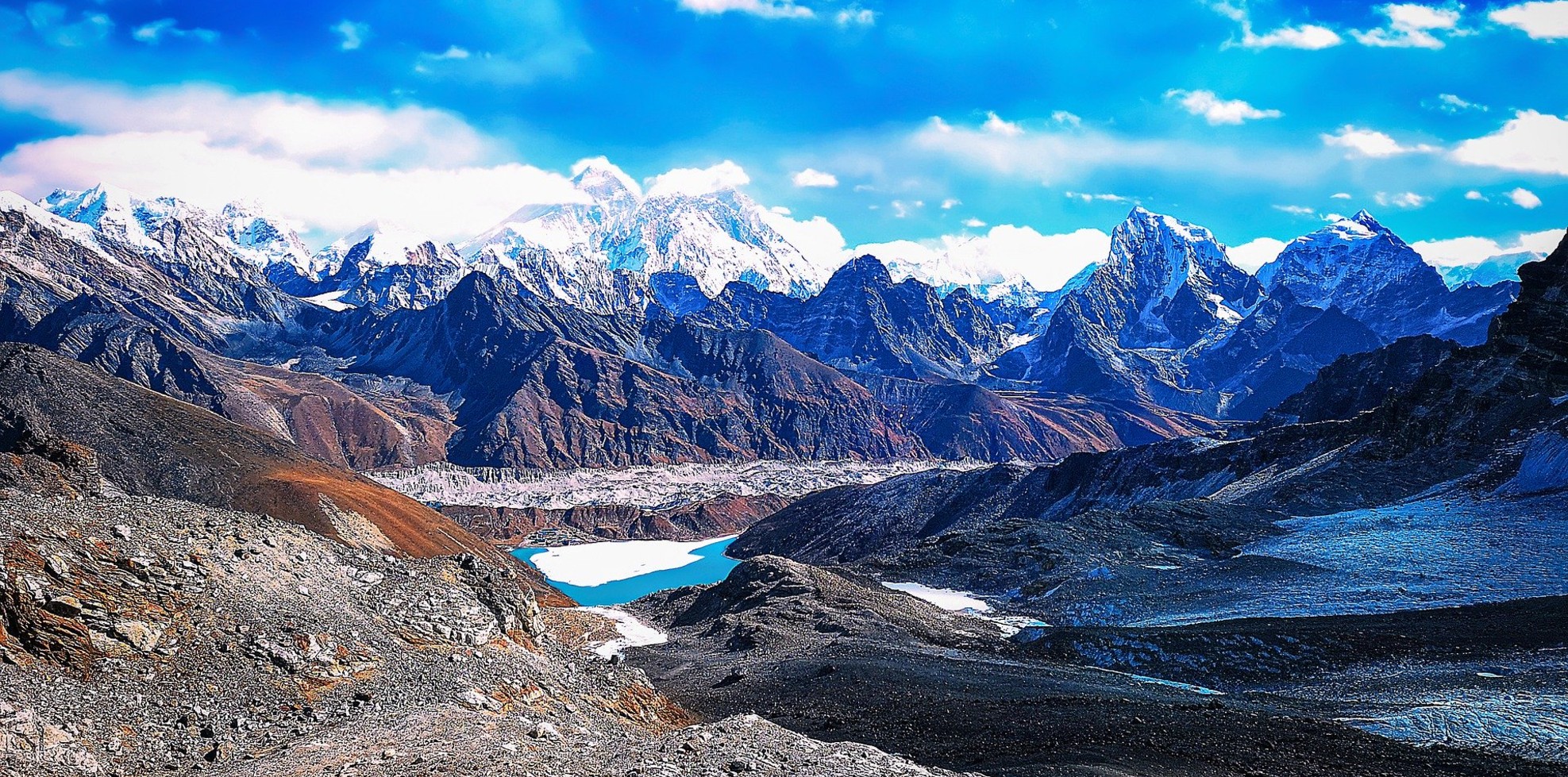
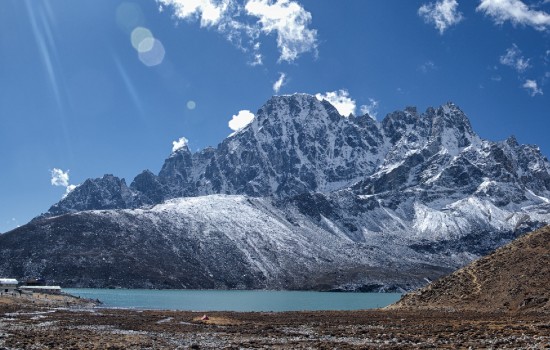 Gokyo Lake Nepal
A Cultural Experience (Nepal is the new equivalent of: The National Tour, and it is one of the most-visited trekker experiences in Nepal, despite the geography being in the mountains). Nepal is a trekker’s dream destination and a cultural treasure. Kathmandu, a beautiful city bursting with ancient temples and markets – and with deeply carved palaces, Nepal’s thriving history is also a window into the past. Among the few sights of Nepal’s architectural genius and religious piety being unveiled are Kathmandu Durbar Square, Patan Durbar Square and Bhaktapur Durbar Square, which are the sites designated of UNESCO Heritage. One of the national holiest Hindu temples, Pashupatinath Temple, where visitors may experience religious ceremonies in addition to a spiritual ambiance.
With its enigmatic land and natural balance, Bhutan is to inspire joy to all its countrymen. Bhutan has a unique perspective for harmonious lifestyle with great commitment towards Gross National Happiness and sustainable development. The Tiger’s Nest Monastery sits precariously on a cliffside and is a living monument to Bhutan’s spiritual culture and one of pilgrimage site, which locals and tourists share as sacred ground. Hands-on tour of Kingdom of Bhutan’s capital with an emphasis on ancient traditions and modern civilization in which traditional Bhutanese architecture blends with modern buildings.
Bhutan’s natural treasures are unparalleled; the country is also the world’s second most beautiful. The Phobjikha Valley, a glacial valley and a winter haven for black-necked cranes, is a haven for nature lovers. Featuring mist-covered mountains and untroubled landscapes, the valley’s peaceful beauty can provide a pastoral escape from life in the real world. At Dochula Pass, passengers enjoy breathtaking views of the Himalayas, with peaks covered with snow and prayer flags flying softly on clouds.
To view the entire Himalayas, tourists to Nepal and Bhutan are a team made in heaven. Travellers from both countries have access to itineraries that combine the best elements of both countries, Nepal’s majestic mountains (a trek tour in Nepal’s highlands) and the tranquil beauty and cultural heritage of Bhutan. This is an unforgettable journey weaving a tapestry of experiences which will take the traveler up a little peak at the various landscapes, spirituality and warmth of the two countries. Best time to come to Nepal and Bhutan. The optimal time to go to Nepal and Bhutan is mainly a matter of weather and what you are going to be doing when you are able to go. There are clearly separated seasons in these two countries so there is something to be said for your holiday.
Related Packages you may like;
The four seasons in Nepal are spring (March–May), summer/monsoon (June–August), autumn (September–November), and winter (December–February).
Spring (March–May): Spring is a lovely time to go to Nepal since the weather tends to be mild, and the ground is full of colorful flowers and trees. It is an ideal time for trekking and visiting Kathmandu and Pokhara at their cultural sites.
Summer/Monsoon (June to August): In Nepal, summers coincide with the monsoon season, characterized by heavy rainfall and high humidity. Although the mountains may be shrouded in clouds, this season is characterized by greenery and fewer pedestrians. At this point, trekking trails can be slippery and susceptible to landslides.
Autumn (September to November): Known to be the best time to visit Nepal, autumn provides clear skies, nice temperature, and beautiful mountain views. This is the high season for hiking, and trekking routes, such as Annapurna Circuit and Everest Base Camp, are swarming with adventurers. The fall months are ideal for cultural visits and festivals such as Dashain and Tihar.
Winter (From December to February): In Nepal for winter you usually get colder temperatures, particularly on mountainous grounds. While trekking at mountain ranges will usually require good facilities and experience, the less elevated regions such as Kathmandu and Pokhara are comfortable for sightseeing. Winter also provides clear views of mountains, especially in early morning hours. Bhutan. Bhutan’s four seasons are the same as the seasons of Nepal, however the best time to visit varies slightly due to its location and altitude.
Spring (March to May): Spring in Bhutan is a month of mild weather and the arrival of flowering rhododendrons, which makes the scenery vibrant. Especially up low, it is a great time for trekking. A renowned celebration, the Paro Tsechu festival, typically takes place in spring and highlights Bhutanese culture and traditions.
Summer (June to August): During the monsoon season, Bhutan has intermittent rain. The valleys and forests are green and lush, but trekking paths can be slippery and difficult during this time. But this is also the season that the bird lover loves, the monsoon brings with it a bunch of different birds.
Autumn (September to November): Like in the case of Nepal the fall is the peak tourist season to visit Bhutan. The weather is clear and there are stunning views over the mountain and the landscape with shades of gold. Fall is the best season for a trip to Bhutan: trekking, culture tours and festivals are all part of the fall so are trips to Thimphu Tshechu and Wangdue Phodrang Tshechu.
Winter (December to February): While winter in Bhutan can also bring some colder temperatures especially in these peaks. However, the lower valleys have only mild weather and are therefore well suited to natural scenic activity and cultural exploration. When winter strikes, everyone stops off at the Punakha Drubchen or Punakha Tshechu festivals. This brings out Bhutan’s rich cultural heritage.
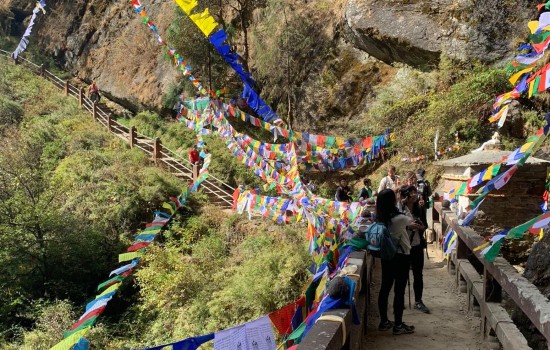
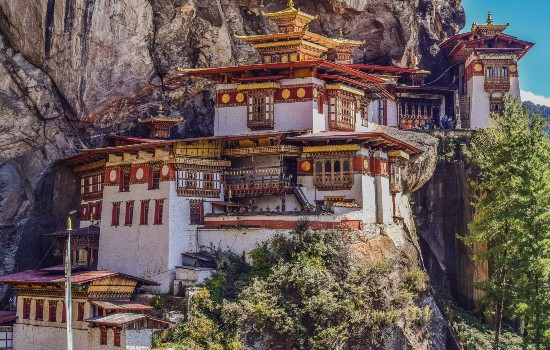 Tigers Nest (Taktsang) in Bhutan
Despite their different cultures, the two countries are similar with their geographical proximity and history. Here are the biggest cultural similarities Between Nepal and Bhutan:
Buddhism: Nepal, and Bhutan both have a fairly large presence of Buddhism. Buddhism is an important part of the cultural and spiritual life of both countries. Temples, monasteries and Buddhist rituals are central to daily life and are revered by the people of the region.
Traditional Festivals: Many festivals are celebrated by Nepal and Bhutan every year. Some festivals celebrate with exuberance such as Dashain, Tihar, and Teej in Nepal, and Tshechu festivals in Bhutan.
Structure: Ethnic building style is inherited by Nepal and by Bhutan. Both countries boast intricately carved wooden buildings, pagodas and temples embellished with bright paintings and intricate motifs. Similar architecture is a reflection of their histories and cultures.
Prayer Flags and Mani Walls: The most common sight is prayer flags and mani walls both in Nepal and Bhutan. When they flutter in the wind, these sacred symbols of the Buddhist faith are thought to carry positive energy as well as prayers. They are available in a diversity of sizes, colors and designs, and are a token of mutual respect for spirituality and harmony.
Traditional Dress: There is cultural significance in both Nepal and Bhutan in the traditional dress. In Nepal we wear the “Daura Suruwal” as the national men’s dress, it is a knee length garment and a topi (cap). For men, the traditional attire of Man in Bhutan is called “Gho” – the knee-length, waist-tie-at-the-waist, long, traditional attire for Men in Bhutanese society. The Sari or Kurta Suruwal in Nepal women and the Kira in Bhutanese women.
Nature: Nepal and Bhutan respect the vast mountains and the land. There is a significant respect for each other in the field of conservation and conservation of nature which is demonstrated from some of their initiatives towards sustainable tourism and conservation.
An adventure in these cultural similarities and differences is a very interesting one to experience, especially for visitors wanting to learn more about the rich history of Nepal and Bhutan.
Taking a tour of Nepal and Bhutan is one of soul-stirring journey where you are able to relax with the breathtaking beauty of the Himalayas, explore rich cultural heritage and the deep spirituality that surrounds us here. Whether you’re in Nepal, scaling the magnificent mountains, or journeying to the quieter valleys of Bhutan, you can’t escape these beautiful countries. If nothing else, prepare yourself for the wonder of Nepal and Bhutan, and the beauty of the Himalayas.
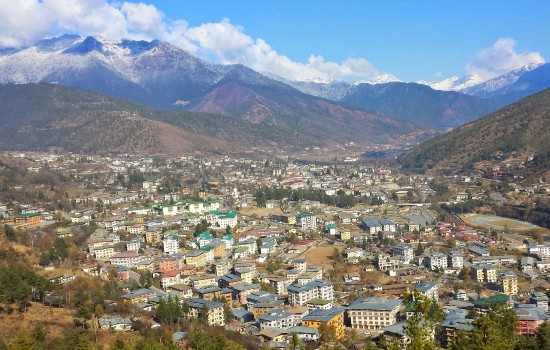
One of the most highly sought-after tourist destinations in the Himalayas, Bhutan…
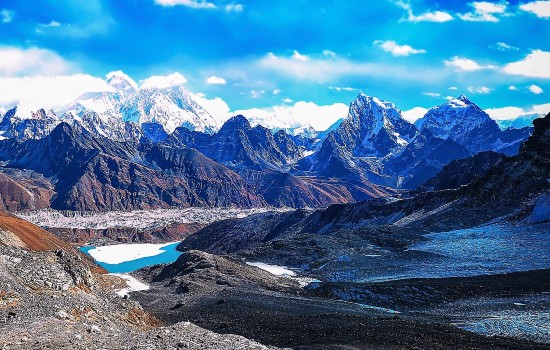
If you've ever daydreamed of misty mountain mornings, prayer-flag-riddled ridges, and the…
Planning a trek in Bhutan? Learn how to choose the best routes…
As you trek up to the Annapurna Base Camp, you will most…
Nepal is a perfect place to stay as it boasts some of…
Gokyo Ri View When is the best time to hike to Everest…